
-
-
Technology and Services

-
About Hongda

-

Performance Characteristics and Application Areas of Titanium Carbide (TiC)
Release time:
2026-03-14 09:04
Source:

1. Performance Characteristics of Titanium Carbide
1 Physical and Thermal Properties
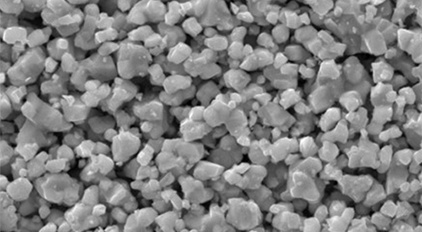
TiC is a metallic‑lustered crystal with an iron‑gray appearance, adopting the NaCl‑type face‑centered cubic structure. It has a melting point of approximately 3140 °C, classifying it as an ultra‑high‑melting, refractory material. With a density of about 4.93 g/cm³, it offers potential for lightweight, high‑strength applications. It exhibits a low coefficient of thermal expansion, moderate thermal conductivity, excellent dimensional stability at elevated temperatures, and outstanding thermal shock resistance, enabling it to withstand severe temperature‑cycling conditions.
2 Mechanical Properties
TiC exhibits a Mohs hardness of 9–10, high microhardness, and excellent elastic modulus and flexural strength, demonstrating superhardness, wear resistance, and resistance to erosion. Under tribological conditions, it exhibits a low wear rate, making it an ideal wear‑resistant reinforcement phase and coating material that can significantly extend the service life of the matrix.
3 Chemical Stability
At room temperature, TiC is insoluble in water and common acids and bases, exhibiting excellent chemical stability; it corrodes only in strongly oxidizing mixed acids. In high‑temperature, non‑oxidizing environments, its microstructure and mechanical properties remain stable, and it can form strong interfacial bonds with metallic and ceramic matrices, making it suitable for use in high‑temperature alloys, cemented carbides, and multiphase ceramic systems.
4 Electrical and Functional Properties
TiC exhibits excellent metallic electrical conductivity and can be employed as a conductive ceramic, electrode material, and diffusion barrier. It also possesses superior electromagnetic shielding and current‑carrying capabilities, while displaying even richer functionalities in low‑dimensional structures such as two‑dimensional titanium carbide (MXene), thereby opening up new possibilities for flexible electronics, energy storage, and sensing applications.
II. Main Application Areas of Titanium Carbide
1 Cemented Carbides and Cutting Tools
TiC is an important modifying component in WC‑based cemented carbides, enhancing red hardness, oxidation resistance, and resistance to crescent‑shaped crater wear. It is widely used in turning tools, milling cutters, drills, and precision molds. TiC‑coated cutting tools excel in machining difficult-to-cut materials, significantly improving both machining efficiency and tool life, and are one of the core materials for high‑end cutting tools.
2 Aerospace and High-Temperature Structural Components
TiC exhibits excellent high-temperature resistance, low density, and high strength, making it suitable for hot-end components of aeroengines, rocket nozzles, thermal protection coatings, and structural reinforcements in aerospace vehicles. When incorporated as a reinforcing phase into titanium alloys and high-temperature alloys, it enhances both elevated‑temperature strength and fatigue resistance, thereby meeting the demanding service requirements under extreme temperature and loading conditions.
3 Surface Engineering and Wear- and Corrosion-Resistant Coatings
TiC coatings are prepared using techniques such as CVD, PVD, and plasma spraying, and can be applied to construction machinery, mining cutting tools, critical automotive components, oilfield drilling equipment, and more. These coatings enhance surface wear resistance, corrosion resistance, and high-temperature oxidation resistance, significantly extending component service life and reducing maintenance costs.
4. Electronic Information and Semiconductor Devices
TiC’s high electrical conductivity, low thermal diffusivity, and excellent barrier properties make it suitable for use as a diffusion barrier layer and an ohmic contact layer in integrated circuits; it also serves as an electrode and a transition layer in memory devices and power devices. Low-dimensional TiC-based materials demonstrate application potential in flexible electronics, electromagnetic shielding, and sensor devices, thereby driving the development of next-generation electronic components.
5. New Energy and Energy Storage Sector
TiC and TiC-based composites can be used for battery anode modification, fuel cell bipolar plate coatings, and electrolysis electrodes, thereby enhancing electrode conductivity, structural stability, and cycle life. In the nuclear industry, TiC’s radiation resistance and chemical stability make it suitable as a nuclear structural material and as an anti-tritium coating.
6 Refractory Materials and the Metallurgical Industry
TiC, when used as an additive, can enhance the high-temperature strength and slag‑resistance of refractory materials, making it suitable for metallurgical furnace linings, crucibles, and high‑temperature kiln furniture. In metal smelting, it serves as a deoxidizer and grain‑refining agent, improving the quality of metallurgical products and extending the service life of high‑temperature furnace components.
Related News
AI Station Building Technology Emerging: Website Development Ushers in New Changes
AI website technology is emerging in the field of e-commerce, providing a new choice for online merchants. This technology can not only simplify the website construction process, but also help e-commerce enterprises to improve user experience and sales conversion rate through personalized recommend, intelligent marketing and other functions. This article will focus on how AI technology plays a role in e-commerce and its impact on the future of the industry.
With the continuous development of blockchain technology, its application in the field of website security has gradually shown its potential. This article will delve into how blockchain technology is changing website security standards, including aspects such as authentication, data protection, and protection against cyberattacks. Through this technology, the security of the website can be improved, resulting in a more reliable online environment for users and businesses.
Technological innovation is the key to the core competitiveness
The Group believes that in the information age of economic globalization, informatization will become the only way for SMEs to enhance their competitiveness, and e-commerce will become the key path for enterprises to achieve informatization. Therefore, the Group will continue to focus on promoting the e-commerce and informatization process of Chinese SMEs, continue to innovate, continue to introduce more and better services, build intelligent Chinese enterprises, and achieve smart entrepreneurs!
The combination of AI website building technology and search engine optimization (SEO) is leading the new trend of website construction. This article will discuss how the two can be combined to help websites improve ranking, drainage and search engine discoverability. The focus of this article is how this new way of cooperation can help your site stand out in search results.

Address: Small and Medium-sized Enterprise Pioneer Park, Yanling County, Zhuzhou City, Hunan Province
Telephone:86+731-26283128
Tel:86-193-0733-5856(Mr. Li)
Fax: 0731-26283108
Copyright: Zhuzhou Hongda Industrial Co., Ltd
This site supports ipv4 ipv6.
Powered by:www.300.cn ChangSha | SEO Tags